Pages

Friday, July 4, 2014

15 Successful, Rich and Famous People – Their Humble First Jobs

We tend to admire and wish how we were born with a silver spoon, just like how lucky Paris Hilton was. While rich background certainly helps, it’s not the only way to the top. Some of the world’s one percent wealthiest people started out dirt poor. And the reason why they’re still the wealthiest today is precisely that – they had a humble beginning hence they know how to appreciate it more than anyone.

It’s true that the rich do get richer simply because money makes money. But these successful people did it through strong determination and extreme hard work before they make it to the list of the rich and famous. For example, Warren Buffett built his savings as a kid by delivering newspapers. And Donald Trump was made to collect empty soda bottles in exchange for money while Li Ka-Shing worked 16 hours a day making plastic flowers.

Let’s take a look at 15 successful, rich and famous individuals (there’re more, of course) who made it to the top today, but they once did strange and odd jobs during their young age. So, perhaps you should learn from their humble beginnings as well.

{ 1 }  Howard D. Schultz Was A Salesman

Howard D. Schultz Was A Salesman As Schultz’s family was poor, the junior Howard saw an opportunity in sports. Schultz excelled at sports and was awarded an athletic scholarship to Northern Michigan University –  the first person in his family to go to college. His first job was a salesman for Xerox Corp. Later, he took over a coffee shop called Starbucks, which at the time had only 60 shops. Schultz became the company’s CEO in 1987 and grew the coffee chain to more than 23,000 outlets worldwide today. He’s now worth US$2.1 billion.

{ 2 }  President Barack Obama Scooped Ice-Cream

President Barack Obama Scooped Ice-Cream Barack Obama is the 44th president of the United States, and the first African American to serve as U.S. President. Obama lived with his maternal grandparents in Hawaii from the age of 10. He got his first job scooping ice cream at a Baskin-Robbins in Honolulu. Sue Thirlwall, Baskin-Robbins’ brand operating officer, told the LA Times in 2009 that the ice-cream business has taught many employees crucial presidential skills. So, remember to send your kids to learn scoop ice-cream (*grin*).

{ 3 }  Larry Ellison Worked Odd Jobs After His Adoptive Mother Died

Larry Ellison Worked Odd Jobs After His Adoptive Mother DiedLarry Ellison is the founder and CEO of Oracle Corporation, and with wealth estimated at US$52 billion, he’s the fifth wealthiest person in the world in 2014. During his second year at University of Illinois, his adopted mother died, and Ellison dropped out of college. With little money, he moved to California to work odd jobs for the next 10-years. Partnered with two of his Amdahl colleagues, they founded Oracle in 1977, and got contract to build database management system for the CIA.

{ 4 }  Richard Branson Was A Bird Breeder

Richard Branson Was A Bird Breeder Entrepreneur Richard Branson, the sifu of famous Air Asia boss Tony Fernandes, launched Virgin Records in 1973. Today Virgin Group holds more than 200 companies in more than 30 countries. According to Branson’sLinkedIn, he partnered with his good friend Nik Powell at the age of 11 and started breeding budgerigars (pet parakeet). They saw the opportunity as they were very popular with kids in school at the time. He have never had a truly job or attend any interview before. That’s because he was already an entrepreneur from a very young age.

{ 5 }  Oprah Winfrey Worked At A Corner Grocery Store
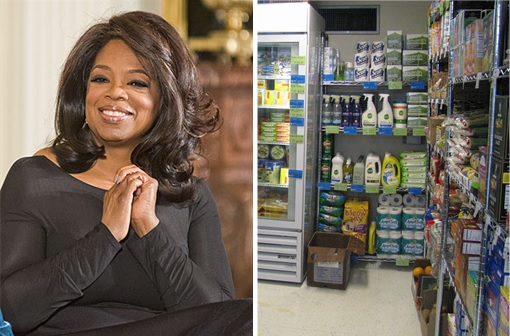
Oprah Winfrey Worked At A Corner Grocery StoreWith an estimated fortune of US$3 billion, the popular Oprah Winfrey Show was the richest African American of the 20th century and the world’s only Black billionaire for three years running. However before she made her fortune, her first job was at a corner grocery store next to her father’s barber shop in Nashville.

{ 6 }  Michael Dell Washed Dishes

Michael Dell Washed DishesWith fortune estimated at US$15.3 billion (2013), Michael Dell is the founder and CEO of Dell Inc. Michael Dell showed an early interest in technology and gadgets. At the age of 15, he purchased an early Apple computer in order to take it apart to see how it worked. But before he made it big, he had a job washing dishes at a Chinese restaurant at the age 12 – so that he could put away money for his stamp collection.

{ 7 }  Donald Trump Collected Bottles

Donald Trump Collected BottlesDonald Trump, a real estate mogul, investor and host of NBC reality show “The Apprentice” has a fortune worth US$3.9 billion (Mar, 2014). Unlike others who were borned poor, Donald’s father, Fred Trump, was a wealthy New York City real-estate developer. But his father wanted him to learn the value of money. His first job was to collect empty soda bottles with his brother, to redeem for cash. He didn’t earn much but it taught him to work for money.

{ 8 }  Michael Bloomberg Was A Parking Lot Attendant

Michael Bloomberg Was A Parking Lot AttendantMichael Bloomberg is a billionaire buisnessman and a three-term mayor of New York City. He is worth a staggering US$34 billion (June 2014), but during his early age when he was enrolled at Johns Hopkins University, Michael Bloomberg actually worked as a parking lot attendant in order to pay off his tuition loans. After being laid off from Salomon in 1981, he started his own IT company, which is now the infamous media empire Bloomberg LP.

{ 9 }  Thomas Boone Pickens, Jr.  Delivered Newspaper
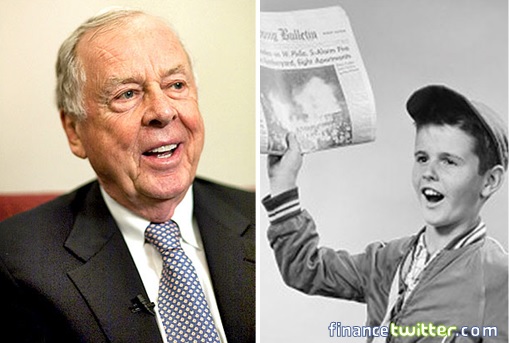
Thomas Boone Pickens, Jr.  Delivered NewspaperKnown simply as T. Boone Pickens, he is the Chairman of BP Capital Management with net worth estimated at USD1.2 billion (2014). A takeover specialist, he was famous for his attempted buyouts of Gulf Oil, Philips Petroleum and Unocal. His first job as a teenager was to deliver newspaper. He was able to increase sales by expanding his newspaper route through acquiring surrounding ones.

{ 10 } Madeleine Albright Sold Bras
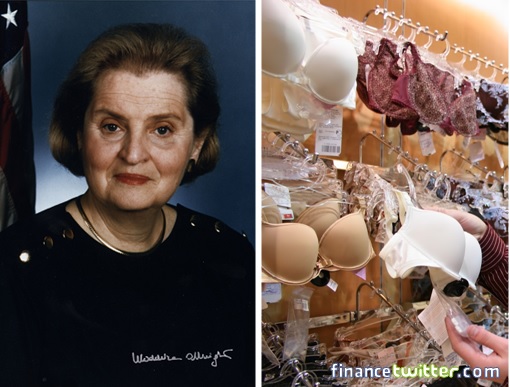
Madeleine Albright Sold BrasMadeleine was nominated by U.S. President Bill Clinton on December 5, 1996, and was unanimously confirmed by a U.S. Senate vote of 99-0, to become United States first woman Secretary of State. Her first job was selling bras at Jocelyn’s Department Store in Denver. She made so little money that she couldn’t remember it but it taught her how to interact with people in situations that aren’t always easy.

{ 11 }  Shahid Khan Washed Dishes
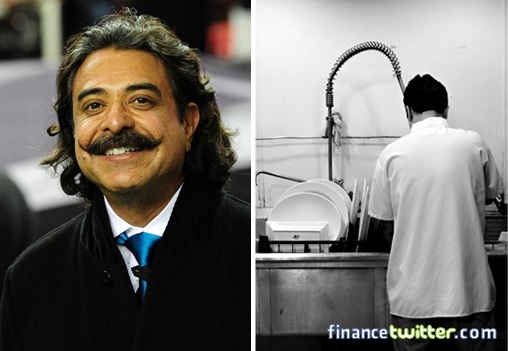
Shahid Khan Washed DishesA Pakistani-born American billionaire, Shahid Khan  is the owner of theJacksonville Jaguars of the National Football League (NFL), the English Football League Championship team Fulham F.C., and automobile parts manufacturer Flex-N-Gate in Urbana, Illinois. When he moved to the United States at age 16 to study at the University of Illinois he spent his first night in a US$2 per night room at the University YMCA, and his first job was washing dishes for US$1.20 an hour. Now, he’s worth US$3.8 billion.

{ 12 }  Ralph Lauren Was A Sales Assistant
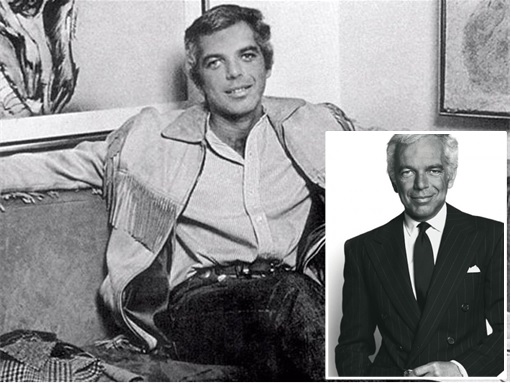
Ralph Lauren Was A Sales AssistantEvery woman knows Ralph Lauren, the American fashion designer who is worth US$7 billion. Born Ralph Lifshitz, he changed his surname to Lauren when he was 16 years old because his given name has the word “shit”, something which all the kids would make a lot of fun of him. It was while working as sales assistant at Brooks Brothers that Lauren was inspired to design a wide, European-style necktie he had seen Douglas Fairbanks Jr (an actor) wearing. In 1967, Lauren sold $500,000 worth of ties and started Polo the next year.

{ 13 }  Li Ka-Shing Made Plastic Flowers

Li Ka-Shing Made Plastic FlowersEverybody in Asia knows who is Li Ka-Shing, popularly known as Superman. With a net worth of US$35.2, the Hong Kong business Godfather is the richest person in Asia. When his father died, he was forced to leave school before the age of 15 and found a job in a plastics trading company. He worked for 16 hours a day. He borrowed money from friends and family and started his manufacturing company – making plastic flowers and grew to be the largest supplier of plastic flowers in Asia. With his newly found fortune, he expanded into real estate.

{ 14 }  George Soros Was a Railway Porter and Waiter

George Soros Was a Railway Porter and WaiterPopularly know as “The Man Who Broke the Bank of England” where he made a cool US$1 billion shorting US$10 billion worth of pounds during the 1992 UK currency crisis, George Soros has a net worth of US$26.5 billion. A Hungarian-born American, Soros  worked as a railway porter and as a waiter while studying at the London School of Economics. It was while he was working at souvenir shops that he realized that he should get a better job with banks.

{ 15 }  Warren Buffett Delivered Newspaper, Sold Coca-Colas & Chewing Gum
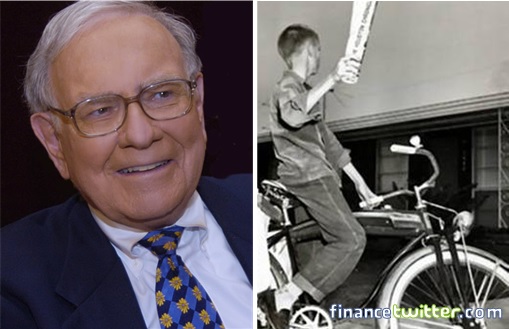
Warren Buffett Delivered NewspaperHis company, Berkshire Hathaway (NYSE: BRK.A, stock) is worth a staggering US$306 billion today. His personal fortune is USD53.5 billion. The billionaire is one of the richest person on planet Earth. Known as “Oracle of Omaha”, Warren Buffett started investing when he was only 11. But at the age of 6, he already began selling Coca-Colas, chewing gum and magazines going door-to-door, in addition to selling horseracing tip sheet and newspaper at the age of 13.

Source: http://www.financetwitter.com/

Wednesday, July 2, 2014

10 things rich people know that you don’t


Shutterstock
As a financial adviser, I have occasionally found myself feeling envious of certain clients. Not because of their wealth — but because they were disciplined and determined enough to do all the right things that enabled them to accumulate their wealth and, in many cases, retire early. Despite my expertise, I, like a lot of people, sometimes struggle not to do the wrong things that make being rich, let alone retiring at all, a pipe dream. 
Financially responsible and successful people don’t build their wealth by accident — or overnight. Becoming rich takes serious willpower and long-term vision. You have to be able to keep your eye on the prize of financial freedom, be willing to sacrifice your present wants for the sake of your future and develop good habits to win. Here are 10 habits you can start putting into practice now.
Start early
As the old saying goes: The early bird catches the worm…or, in this case, gets to retire in style. The sooner you put your money to work, the more time it has to grow. Earning a paycheck, whether you are self-employed or work for a company, means the opportunity to contribute to an IRA, which you should seize ASAP. If you’re fortunate enough to get a job with a company that offers a matching contribution to their retirement plan, you need to make it a priority to enroll in the plan as soon as you are eligible. It can be the difference between retiring early and never retiring.
Think about this: If you invested $10,000 and left it to grow for 40 years, assuming an average return per year of 8%, you would end up with over $217,000. But if you waited 10 years and invested $20,000 — twice as much — you would only end up with just over $200,000. 
Whatever your situation might be, saving and investing money today is better than waiting until tomorrow. Start now.
Automate
You can be your own worst enemy when it comes to financial success. It’s all too easy to procrastinate and neglect what needs to be done and, meanwhile, give in to temptation and spend more than you should. It’s the perfect recipe for not becoming rich. 
The best way to protect yourself from yourself is to automate your savings. That means setting up recurring transfers on a regular basis from your checking account to your savings and investment accounts (or setting up auto deduction from your paycheck to your employer-sponsored retirement plan). This way, you force yourself to avoid bad money habits and save what you would likely otherwise spend. If you haven’t already, set aside 15 minutes on your calendar now to do it. Not later, now. Your rich future self will thank you. 
Maximize contributions
When it comes to retirement account contributions, you’ve probably been told to start small and then try to increase the amount by at least 1% every year until you max out. If you’ve been procrastinating, then yes, even a small starting contribution is better than none. The problem is that small efforts can lead to small results. If you want to be rich, you have to save like you mean it. And that means contributing the max amount allowed from the get-go (and at least as much as your employer will match in your 401(k) plan). 
This is especially true if you are starting to save later in life and need to play catch up. You might worry that maxing out your contributions will squeeze your cash flow too tightly, but it is easier to get in the habit of spending less if you don’t have that extra to money to spend in the first place. It’s much harder to increasingly scale back your budget year after year to accommodate for increasing contributions. 
Never carry credit card balances
Revolving, high-interest debt is one of the biggest threats to your financial freedom. It can seriously drag you down, costing you thousands in unnecessary fees and interest charges — and prevent you from saving more. If you ever want to be rich, you have to ditch the bad habit of carrying credit card balances, along with the minimum payment mentality. 
Instead, you need to learn how to use credit wisely, rather than as a crutch, and commit to paying off your balances in full each month. Smart credit card holders know and practice the tricks to maximize rewards, points, discounts and monthly cash flow without getting in over their head. Of course, living within your means is key to your success.
Live like you’re poor
Have you ever met someone who is unassuming and modest and then were surprised to later learn that they are actually rolling in dough? I had an older client who was stuck in 1983: he wore ugly brown suits and running shoes, drove a beat-up baby blue Volvo station wagon and lived in the same modest house he bought 40 years ago. Turns out, this man was an uber-successful entrepreneur and multimillionaire — and even richer because of his humble habits.
Millionaires are all around us, and many of them are probably not who you would think. This is because they smartly live below their means and save their money rather than showcase it. Of course, it’s easy to live below your means when you have millions, but even if you have far less, getting into the habit of spending minimally now will help you have a lot more later. The trick is adopting a “less is more” mentality and sticking with it, even when your income and net worth increase in the future.
Avoid temptation
The temptation to live large and beyond our means is all around us: TV, magazines, friends, family, colleagues, “the Joneses.” It is nearly impossible to escape the pressure to spend, spend and then spend some more. The problem is that overspending often leads to debt accumulation, undersaving and long-term financial insecurity. 
Force yourself to avoid negative financial influences as much as possible. That means going cold turkey: Avoid malls, unsubscribe from all those retail emails and don’t sign up for new ones and say “no” to invitations that you know will cost you. 
Then, replace these temptations with things that motivate you.
Be goal-oriented

Have you hit a snag with your office mentor?

Young employees sometimes hit snags in their relationships with their office mentors but there are ways to salvage the relationship.
Goals inspire us, motivate us and give us purpose. Many of us have common goals, such as paying off debt, buying a house and retiring by a certain age. Maybe you have another goal of starting your own business or buying a second home. Unfortunately, goals are easily overshadowed by the daily stresses of life and all too often forgotten and neglected. When goals are just fleeting thoughts in your mind, they lose their meaning and influence over your behavior. This leads to bad financial habits, and your dream of becoming rich stays just that — a dream. 
To make it a reality, stay focused on your goals by committing the time to think about them, prioritize them and assign a target saving amount to each of them if possible. Then you should display your goals in places where you can be reminded on a regular basis, which will keep you accountable and help you stay on track. 
Get educated
Successful investors take the time to study key financial concepts, learn the dos and don’ts and stay abreast of current trends. They take advantage of opportunities to strengthen and expand their understanding and expose themselves to financial information on a daily basis. Take a cue from them and subscribe to The Wall Street Journal NWS +0.65%  , watch CNBC CMCSA +0.01%  , pick up Fortune TIME +1.12%  instead of a gossip magazine and follow financial experts on Twitter TWTR -0.02%  . Become a devoted student of money, and you can master the science of getting rich.
Be careful not to overwhelm yourself, and only follow advice from credible sources, so you don’t fall victim to progress paralysis or unsuitable and potentially dangerous investments.
Diversify your portfolio
Successful investors also know not to put all of their money eggs in one basket—or two baskets, for that matter. They spread their wealth across a variety of investments, from stocks, mutual funds, ETFs and bonds, to real estate, collectibles and startups. A diversified portfolio means that you can potentially take advantage of multiple sources of growth and protect yourself from financial ruin if one of your investments bombs.
An easy way to achieve diversification is to invest in an asset-allocation fund, such as a target-date fund or “life strategy” fund that is based on your risk tolerance. And if you don’t have the means to buy property outright, you can explore investing in real estate mutual funds, ETFs or investment trusts (REITs), which can even offer steady income in some cases. Learn more about crowdfunding, which now gives the average investor the ability to support startup companies. Just be careful not to concentrate your money too heavily in any one investment.
Spend money to make money
Warren Buffett
It’s true that there’s a price to pay for wealth, but unless you’re Warren Buffett, it is not gambling — and losing — on stock picking. Impulse, naiveté, and emotions, particularly greed and fear, can seriously hinder your chances of being rich if you let them. The best way to protect yourself and get a step up on your financial goals is to first invest in a team of financial professionals. This means hiring a qualified and experienced financial adviser, accountant and in complex cases, an estate planner. Yes, working with pros will cost you, and you can still do some DIY investing, but their objectivity, expertise, personalized guidance and ongoing monitoring can be well worth it (and relieve you of the huge burden of figuring it all out on your own). 
Make sure that you interview several candidates so you can find pros you trust, feel comfortable with and whose approach is a good fit for your situation. And even if you work with an adviser, make sure that you’re still involved and aware of where your money is going — and why.
Jocelyn Black Hodes is DailyWorth’s resident financial adviser.
The story “10 Habits of High Net-Worth Women” originally appeared on DailyWorth.com.

Money Optimisation


Money optimisation is the activity of optimising the income and assets that you already have. Money optimisation is also about making your accumulated assets work for you to support your lifestyle.

Why Money Optimisation?
  • Without money optimisation, your hard-earned income may not be translated into meaningful savings.
  • Without money optimisation, your hard-earned assets will not grow at an optimal rate.
  • Without money optimisation, your hard-earned assets may not be properly preserved and protected against various risk factors.
  • Without money optimisation, your hard-earned assets may not be deployed effectively and efficiently to support your various needs and wants in life
Some people may mistake money optimisation for another area of personal finance, i.e. money management. According to Cambridge Dictionaries Online, money management is the 'activity of organising and investing your own or someone else's money.' However, the process and characteristics of money optimisation is more complex. It involves the following key components:
1. Money optimisation is comprehensive and balanced

In addition to budgeting, investing, banking and taxes, money optimisation also includes risk management and estate planning. Risk management is a major component of money optimisation because you do not want maximise your money alone. You need to maximise your money with reasonable risk so that you protect and preserve your accumulated assets at all times. One common mistake Malaysians make is to spend more time on the areas that interest them like investment planning and spend less (or no) time on areas like estate planning or risk management. This imbalanced approach often means that they risk overlooking some opportunities for money optimisation. The eight areas of personal finance that money optimisation covers include:
1. Risk management and insurance
2. Investment planning
3. Education planning
4. Retirement planning
5. Asset protection
6. Estate planning
7. Debt and loan management
8. Tax planning

2. Money optimisation is a holistic approach 

You must not look at each of the 8 areas of personal finance in isolation. To optimise your money fully, you must manage each area by taking into account how it will influence and affect other areas of your personal finance. For example, you cannot commit to maximum life insurance premiums without taking into consideration your need to accumulate assets for your retirement. Similarly, you cannot continue to invest in more properties without considering its implication on your ability to repay the loans.


3. Money optimisation is 'Life Goals' driven 

You cannot just grow your money for the sake of it. To optimise your money to its fullest potential, you need to link your money optimisation activities to support specific important life goals. Examples of life goals are such as your children's university education, a dream home, a comfortable retirement or your family's financial security. Because money optimisation supports your financial goals throughout your lifetime, it requires you to address it in a longer time perspective than money management. 

Money Optimisation & Moneymaking: Finding the Optimal Balance

Moneymaking is the activity to generate active income. You may derive an income from your job or business, but to have good moneymaking capability, you must concentrate your time, resources and effort to one area where you do best. For example, a general practitioner focuses his resources to become a heart specialist. He is able to increase his moneymaking capability from medium to high because he is able to charge higher fees for his level of expertise. Likewise, a small business owner increases his moneymaking capability from medium to high when he concentrates his resources and successfully grows his business to become a market leader in his industry.

Both Money Optimisation & Moneymaking must work hand in hand in order to achieve financial success. You must not only focus on one, and forget the other. Both are equally important. To show you how tightly money optimisation & moneymaking correlate with each other, we must first understand about the Money Matrix.


The MONEY MATRIX


The MONEY MATRIX is a tool created by Yap Ming Hui to help you understand the current state of your finances and how you can move towards financial freedom and, eventually, wealth.


Moneymaking Capability: The Y-axis measures a person's moneymaking capability. Specifically, it measures your ability to generate an active income – the higher your moneymaking capability, the more income you generate.
Money Optimisation Capability: The X-axis measures a person's money optimisation capability. Specifically, it measures your ability to turn your active income into assets and then use it to support your lifestyle in the most optimal manner. The higher your money optimisation capability, the more assets you will accumulate and preserve.

There are 2 reasons why a person's money optimisation ability could be low:

1. The person fails to pay attention or put any effort into money optimisation activities
2. Some effort was made to optimise money, but the results have been disappointing due to limited knowledge and experience.
The activities undertaken for money optimisation will vary depending on a person's intention to move towards self sufficient, financially free or wealthy, in the money matrix. A person with high money optimisation capability would most likely gain a very important life lesson – the freedom of choice. He/she can choose to work because he wants to, not because he has to.


Discovering Where You Are On the Money Matrix 

There are six unique sections in the MONEY MATRIX. Each person belongs to one section and all people in that section share common characteristics. The sections will show you where you are today and will help you chart a course for where you want to be in the future. To understand how the matrix works, you must first comprehend two important points:
1. Your position in the MONEY MATRIX depends on two factors: your moneymaking capability and your money optimisation capability.
2. Your position in the MONEY MATRIX is not static. This means that you can move from one section to another. This movement is also dependent upon your moneymaking capability and your money optimisation capability.
Now, let us look at each section independently within the MONEY MATRIX. Can you find where you are on the MONEY MATIRX?
Poor
If you have low moneymaking capability and low money optimisation capability, you are in the Poor section of the MONEY MATRIX. Your income is low and you spend most of it taking care of your living expenses. The risk is that you will not be able to take care of your basic living needs if you no longer have your current active income. You will need to depend on someone else financially for your basic survival needs.

Middle Class 

If you have medium moneymaking capability and low money optimisation ability, you are in the Middle Class section of the MONEY MATRIX. You have an above average and decent income but you spend most of it maintaining your comfortable lifestyle. The risk is that you will not be able to maintain this lifestyle if you lose your current active income.


Rich

If you have high moneymaking ability and low money optimisation capability, your income is very high, but you spend most of it maintaining a luxurious lifestyle and your financial resources are not fully optimised. You will not be able to maintain this lifestyle if unexpected financial disaster strikes and you lose your current source of active income.


Self-Sufficient 

If you have low moneymaking capability and high money optimisation capability, you are in the Self-Sufficient section of the MONEY MATRIX. You may have a low income but you manage your personal finances very carefully. You have some money saved up and may have some of it invested wisely. As a result, you manage to accumulate enough assets to ensure your financial survival in the event you lose your active income. You may live a simple life, but you do not have to depend on anyone else for your survival.


Financially Free

If you have medium moneymaking capability and high money optimisation capability, you are in the Financially Free section of the MONEY MATRIX. You control your expenses so that they do not grow in tandem with your increasing income. Instead, you capitalise on the opportunities provided by this increase in your income and focus on saving or investing a high percentage of it. As a result, you manage to accumulate a reasonable size of assets to maintain your current living standard. In the event that you stop earning an active income, you will still have enough assets to take care of your living expenses until you die. However, after your demise, your assets and the income generated will be depleted.


Wealthy

If you have high moneymaking capability and high money optimisation capability, you are in the Wealthy section of the MONEY MATRIX. You have an extremely high income and enjoy a comfortable, but not luxurious, lifestyle. You turn a very high percentage of your income into savings and invest it wisely. As a result, you manage to accumulate a sizeable amount of wealth that generates a huge amount of passive income for you which is more than enough to cover your living expenses. In addition, you have deployed the necessary measures to protect your wealth, thereby, making it, in theory, last generations.

In order to transition through the MONEY MATRIX, you must first determine which of the six (6) sections you are presently at. Next, use the MONEY MATRIX as a guide to help you improve your financial position until you eventually arrive at the strongest financial position, the Wealthy section.


Source: yapminghui.com

Thursday, June 26, 2014

Cost of living going up and up in Malaysia


THE cost of living has been escalating over the last 10 years, as reflected by the following indicators. On average, over the 10 years, domestic consumer prices have gone up by 2.5% per annum, while asset prices (eg residential properties) have gone up by 6.1% per annum.

This was largely due to cost push factors from rising global commodity prices over the period – rice up 47.4%; wheat 61.5%; crude palm oil 46.6%; crude oil 142.6%. 

The rising cost of living poses an immediate challenge to the domestic economy and it must be addressed appropriately.

Since September 2013, inflation has jumped 3.2%. The rise was largely due to cost-push pressures, after the Government emphasised subsidy rationalisation plans, with a first hike of 20 sen on petrol and diesel as well as abolition of subsidies on sugar. 

In early January this year, new power tariffs for residential users were introduced, while the Government decided to raise gas prices for non-power users beginning May 1 from an average of RM16.07/MMBtu to RM19.32/MMBtu. 

While the Government focuses on targeted subsidies with a gradual phasing-out of subsidies on petrol (RON95), the unpleasant reality is the general rise in overall inflation in recent months. 

The issue at stake is, how will our economy and Malaysian households cope with this rising inflation at large, and especially the cost of living? 

Fortunately, our macroeconomic performances seem to be on track thus far: firm unemployment rate at 3% and a robust growth of 6.2% in 1Q14, despite some noises from major economies like China, the United States and Europe. 

However, the resilience is only half-truth of the story. Clearly, inflation has eaten into household consumption. Close to 40% of Malaysian households have a combined monthly income of less than RM3,000. 

These households and the middle income bracket of just above the threshold have had their budgets squeezed. 

In this regard, incidents of bankruptcy have also risen in the past few years, from 13,238 in 2007 to 21,987 in 2013.

How to cope 

To alleviate the hardships of the low income bracket, the Government opted for a fiscal policy choice. Bantuan Rakyat 1Malaysia (BR1M) cash handouts is a targeted effort to assist those in the low income group. 

However, if cash handouts are made a permanent feature, the rakyat will start to expect and rely on this policy for their economic wellbeing. The endowment effect of BR1M will eventually be no different from the mentality of long-term dependency on subsidies for fuel and energy. 

For sustainable economic wellbeing, households should take proactive measures to safe guard themselves of economic hardships.

When the going gets tough, the tough starts saving. The virtue of saving for a rainy day is a relief to weather the inflationary storm. Therefore, to save is to first budget. 

A guide to efficient budget planning is the 50/30/20 thumb rule, coined by Harvard bankruptcy expert Elizabeth Warren and her daughter, Amelia Warren Tyagi in their book, All Your Money Worth: The Ultimate Lifetime Plan. 

According to the rule, one should spend 50% of net income on “needs” such as groceries, insurance, utilities, and housing; 30% on their “wants” or non-essential items, such as gadgets, cable TV, and coffee; and 20% on savings and retirement accounts. 

Maintaining a household balance sheet is the first step to responsible financial management and taking charge of your money. With discipline, maintaining monthly financial targets will be more transparent. 

Long-term budget requires setting apart savings for short-term, mid-term and long-term financial goals. Besides these goals, you should always factor in inflation too. 

To beat inflation and protect your savings, you should invest part of your savings in assets that have higher returns that the anticipated inflation rate. Currently, as inflation rises above interest rates, consumers should be concerned about the decreasing value of their money saved in banks. 

Perhaps, what is even more worrisome than your money losing value is to owe money – debt. Indebtedness among Malaysian household debts is currently one of the highest in the region. 

According to Bank Negara, household debts in Malaysia have risen at an average rate of 12% annually over the last five years. 

In fact, household borrowing last year has risen to 86.6% of the total value of the economy, compared with 81% in 2012. 

Unfortunately, financial literacy is still lacking in certain quarters and poor money management has led to over 20,000 Malaysians being declared bankrupt last year, a 12% increase from the previous year. 

Out of the over 20,000 Malaysians declared insolvent last year, 26.5% were due to defaults in car loans, followed by housing loans, personal loans and business loans. Notably, personal loans saw an annual increase of 21% from 2010 to 2013 and represents 16.8% of total household debts. 

Good debts, bad debts 

However, not all debts are bad apples. One needs to distinguish between good and bad debts. Taking up personal loans and unnecessary car loans are bad debts. Loans that are spent on unproductive matters will only shave off part of your monthly disposable income. It does not add value to your assets other than satisfying your cravings. 

Unmonitored credit card spending is a sure way to accumulate bad debts. During inflation, it might be tempting to stretch your budget by paying through credit. 

Further indebtedness will soon have its consequences.It is also crucial for one to fully settle credit card balances at the end of every month to avoid the 16% charge. 

On the other hand, taking up a housing loan when you are financially capable – and after doing sufficient research - can be a good move, as it is seen as a good debt. After all, the value of properties tends to only appreciates over time. However, you must assess your cash flow to ensure that you are able to service the monthly repayments to avoid a loan default. 

These are only some tips to help battle inflation and cope with rising costs. Inflation is a time for adjustment. 

A gradual long-term economic equilibrium to higher prices will serve well in the future, rather than short-term subsidy plugs to defer the painful adjustment. 

Having weathered through this adjustment, the economy would be able to cut its excesses and the households would be even more resilient to future inflation and also economic shocks. 

With a little discipline, prudent spending goes a long way. 

Manokaran Mottain is chief economist at Alliance Bank Malaysia Bhd

FOREX 4U