Pages

Friday, October 14, 2011

Malaysia’s rich spend mostly on cars, yachts and planes


KUALA LUMPUR, Oct 14 — When they have some extra cash to blow, Malaysia’s rich prefer splurging on a fancy new set of wheels, luxurious yachts or private jets, the Asia-Pacific Wealth Report 2011 has revealed.
These big spenders see less glitter or glamour in jewellery or swanky watches, unlike their rich Southeast Asian counterparts in Singapore, who prefer burning bucks on these sparkling adornments.
Last year, 46 per cent of Malaysia’s rich invested their ringgit in luxury collectibles like cars, boats and jets, the highest percentage of any country within the Asia-Pacific region.
In 2010, 46 per cent of Malaysia’s rich invested their ringgit in luxury collectibles like cars, boats and jets, the highest percentage of any country within the Asia-Pacific region. — Reuters file pic
The region’s average topped at just 30 per cent, with Malaysia leading the list and followed by Taiwan at 38 per cent, Indonesia 36 per cent, China 35 per cent, Japan and Australia tied at 30 per cent, South Korea 28 per cent, Hong Kong 23 per cent, India 21 per cent and Singapore, merely six per cent.
Twenty-four per cent of Malaysia’s rich chose jewellery over gleaming sports rims while 16 per cent took a fancy to acquiring rare collectibles like special wines or old coins.
A small 10 per cent thronged art galleries to spruce up their collections while others invested in their favourite sports teams and other miscellaneous “investments of passion”.
The report, released yesterday by Merrill Lynch Global Wealth Management and Capgemini, surmised that such “investments of passion” would continue to hold appeal to all “high net worth individuals” or HNWIs within the Asia-Pacific market as the ranks of the wealthy in the region continue to grow at a brisk pace.
HNWIs are defined as those having investable assets of US$1 million (RM3.13 million) or more, excluding primary residence, collectibles, consumables, and consumer durables.
“Investments of passion hold appeal for all HNWIs, both for their aesthetic appeal and their potential to gain in value. Asia-Pacific HNWIs’ appetite for investments of passion increased in 2010, especially in emerging markets that suffered less than developed economies in the global downturn,” the report said.
The report also said last year’s spending pattern revealed that a majority of HNWIs in Asia-Pacific remained most heavily invested in real estate and equities.
An estimated 30 per cent of the financial assets of Malaysia’s rich is in real estate, followed by 28 per cent in equities, 26 per cent in fixed income, 10 per cent in cash or deposits and six per cent in other alternative investments.
A majority of the HNWIs’ holdings also stayed within their respective home regions, the report added.
“Malaysia, China, and India, the allocations to home-region investments remained high at around 85 per cent,” it said.
When compared to its neighbours in the region, however, the report said Malaysian HNWIs assets were the least diversified with 86 per cent in home-region investments.
The report surmised that the Asia-Pacific HNW segment had “thrived” last year but was expected to face a slump this year and in 2012.
“The number of HNWIs in the region grew to 3.3 million in 2010, from 3.0 million in 2009, making the HNWI population 18.3 per cent larger than in 2007.
“As a result of that growth, the Asia-Pacific HNWI population also became the second-largest in the world, overtaking Europe (which had 3.1 million HNWIs in 2010), and nearing that of North America (3.4 million),” the report said.
Economic expansion in the region was likely to “abate slightly”, however, this year and in 2012, as economies absorb the withdrawal of fiscal and monetary stimulus, rising inflation, constrained capacity, and the macroeconomic imbalances prompted by large foreign-capital inflows.
“As a result, GDP growth in Asia-Pacific excluding Japan is expected to slow to 6.9 per cent in 2011, and 6.8 per cent in 2012 (down from 8.3 per cent last year),” it said.

Sunday, October 2, 2011

PM: Another round of economic liberalisation in 2012 Budget


KUALA LUMPUR (Sept 12, 2011): There will be another round of economic liberalisation in the Budget 2012 announcement next month, says Prime Minister Datuk Seri Najib Abdul Razak.
"Liberalisation is good for our long-term sustainable competitiveness. It builds our intrinsic strengths not through protection or subsidies," he said in an interview withForbes Asia Magazine
.
The interview was featured in a special edition of the magazine this month.
"We have been liberalising the economy, but I have to assuage domestic concerns that opening up too fast would be threatening," the Prime Minister said in reply to a question on how Malaysia was liberalising its economy.
"We should be competitive because of factors such as our productivity, technologies and processes," said Najib who is also the Finance Minister.
On how the Malaysian economy was performing, Najib said that the country's recovery from the global financial crisis had been robust.
"Following the economic contraction in 2009, we achieved 7.2% growth in 2010. The strong recovery is continuing in 2011 and we expect to achieve five to six percent growth this year," he said.
Najib said figures on fundamentals such as public and private investment as well as consumption were looking strong.
"One of the key factors for the turnaround is an increase of 530% in foreign direct investment (FDI) whereby it touched about RM28 billion in 2010," he said.
Najib last week had announced that for the first half of 2011, Malaysia had wooed RM21.3 billion in FDI.
"Investors are becoming more confident in our economic transformation programme (ETP) and our new economic model.
"We are making decisions expeditiously on customising incentives for FDI that contribute significantly to high paying jobs, new technology and positive spin-offs for the local economy," he said.
Najib noted that at this time of global recovery, "we are positioning Malaysia strategically as a hub for Asean and East Asia."
On Malaysia's economic ties with Asian countries and the Middle East, Najib said the country had good economic ties with China with total trade having reached the RM149 billion mark.
"One area I would like to enhance significantly is to encourage the Chinese to increase their long term investments in Malaysia beyond short-term investment such as projects in construction."
With Singapore, he said Malaysia had resolved a thorny 20-year problem on their points of agreement and were now in a constructive mode in terms of their bilateral ties.
"Even though we compete, we should develop a productive relationship wherever we can. That is the strong political signal given by both governments."
Najib also said he had developed very strong personal ties with leaders in the Middle East and as a result they were looking at Malaysia for economic involvement.
"Abu Dhabi has become our partner in the KL Financial Center and would like to build a downstream integrated aluminium facility in Sarawak," he said. – Bernama

Sunday, September 25, 2011

Malaysia's inflation may have peaked: Zeti


Malaysia’s inflation has probably peaked and price pressures may ease as the global economy deteriorates, central bank Governor Tan Sri Zeti Akhtar Aziz said, joining neighbours in signaling less pressure to tighten policy.

“Right now, we have to wait for greater clarity on the outlook for growth and inflation before taking any further adjustments” on interest rates, Zeti said in an interview in Washington late yesterday.

“Given the more moderate global growth and in terms of the external environment and its implications on the domestic economy, we believe domestic sources of inflationary pressures will be less.”

Interest rates are still at a level that is supportive of growth, which may be “about the same or slightly better” in the second half of this year compared with the first, Zeti said.

The economy grew at the slowest pace since 2009 last quarter. The government will give updated forecasts for growth in 2011 and 2012 when the annual budget is unveiled next week, she said.

Europe’s debt crisis and a weakening U.S. recovery are threatening growth in Asia as demand for the region’s exports eases. Central banks from South Korea to the Philippines have refrained from rate increases in recent months, with Bank Negara

Malaysia keeping the benchmark overnight policy rate at 3 percent this month after four increases from early March 2010 to May this year.

Malaysia’s inflation slowed in August for the second straight month to 3.3 per cent. Consumer prices will probably rise 3 percent to 3.5 per cent in 2011, Zeti said. - Bloomberg

Materialistic society paying a high price for choosing status over their needs


PETALING JAYA: Despite the rising cost of living, Malaysian consumers identify strongly with expensive branded products, said the Federation of Malaysian Consumers Associations (Fomca).
Its chief executive officer Datuk Paul Selvarajsaid instead of buying cheaper in-house brands, consumers opt for branded items that are usually more expensive.
“This shows we have become a materialistic society,” he said during The Star's “Protect Our Pockets” roundtable on the rising cost of living on Tuesday.
He said Malaysians have become obsessed with brands until they overlook cheaper price items which they think have less quality.
“Appearances have become more important than substance. They buy a car not because it could bring them from one place to another but to make them feel better.
“It is about our value system. One example is buying a Honda City when they can only afford a Perodua Kancil,” said Selvaraj.
Other panellists at the roundtable were Malaysian Retailers-Chains Associations secretary-general Valerie Choo, Carrefour marketing communications (Singapore and Malaysia) director Low Ngai Yuen,Pemandu director of National Key Result Areas and National Key Economic Areas D. Ravindran, Pemandu senior manager Philip See andThe Star's executive editor Datuk Wong Sai Wan.
Wong added that the basic rule of smart consumerism was spending within one's means and being mindful of consumption.
“You can come out with all sorts of formulae, but you must spend less than you earn. Everyone should also set aside at least 30% of their earnings for emergencies,” he said.
Choo concurred, adding that: “Financial planning is more than just an ability to manage money but a value that is inculcated at a young age.”
She added that parents play a vital role as role models for their children on the importance of savings.

Thursday, September 15, 2011

2011 NEW Perodua Myvi 1.5 Extreme and 1.5 SE Officially Launched in Malaysia


8650  630xfloat= perodua myvi 1 5 media launch 4 Perodua Myvi 1.5 Extreme and 1.5 SE Officially Launched in Malaysia
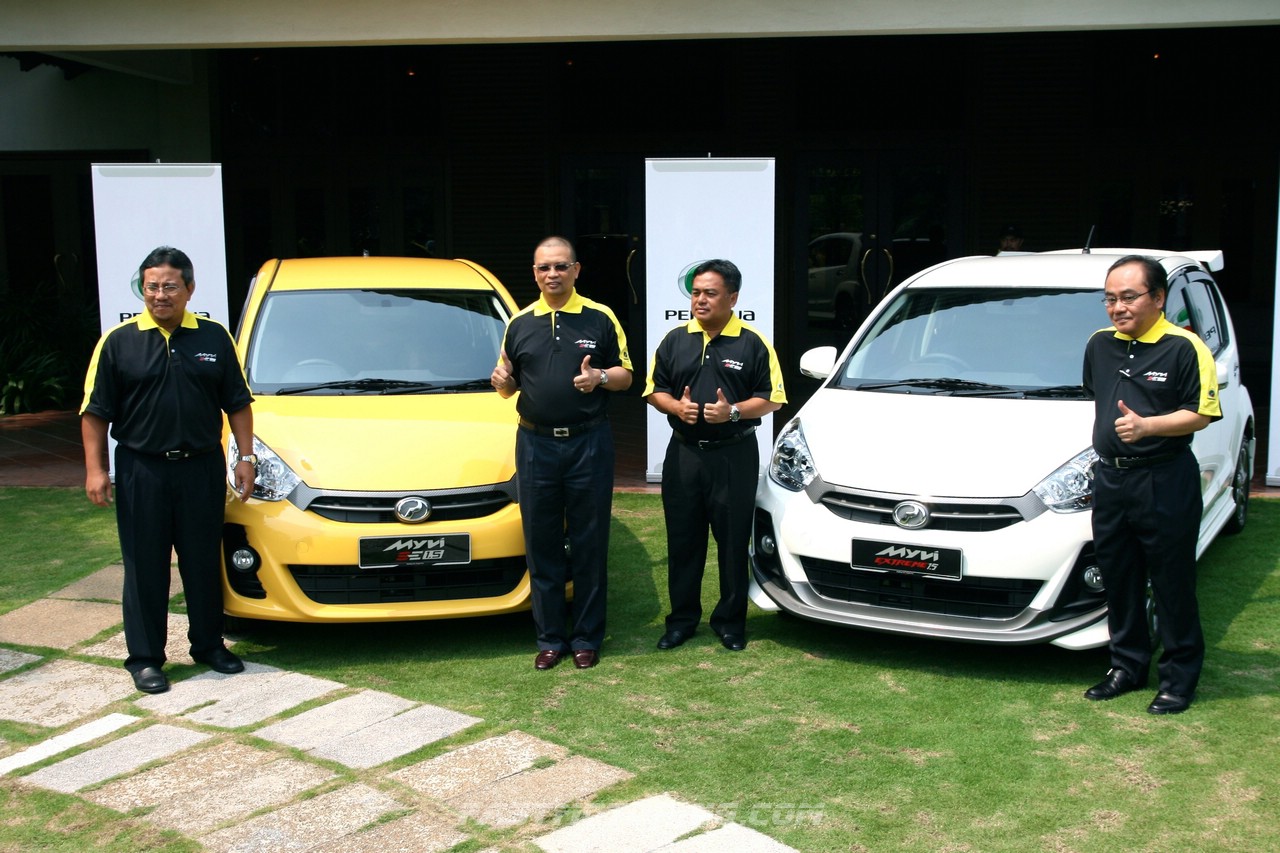
The new 2011 Perodua Myvi 1.3 was launched in June 16 with 3 variants: Standard, Premium and Elegance. To further boost the sales of Myvi model, Perodua now launched 2 new variants – the new Myvi SE and Myvi Extreme with 1.5-litre DOHC 16V DVVT engine to all its prospective customers. The new Myvi 1.5 is marketed with the catchphrase “Lagi Power, Lagi Best”.

Despite the fact that Perodua developed the new Myvi 1.5 at the same time as the current Myvi 1.3 model. However, we think that Perodua have done a great job in styling the car and well responded to their customer requirement and feedback in terms of performance.

The new Myvi SE and Myvi Extreme are priced between RM 50,900 and RM 61,700 depending on the specifications. Both variants offer the choice of 5-speed manual or 4-speed automatic transmission.

On-the-Road (OTR) price in Peninsular Malaysia

Perodua Myvi 1.5 SE
- Manual – RM50,900 – RM 51,400
- Automatic – RM 53,900 – RM 54,400 (with standard audio headunit)
- Automatic – RM 56,000 – RM 56,500 (with multimedia & navigation system)

Perodua Myvi 1.5 Extreme
- Manual – RM 58,200 – RM 58,700
- Automatic – RM 61,200 – RM 61,700

8644  630xfloat= perodua myvi 1 5 extreme 16 Perodua Myvi 1.5 Extreme and 1.5 SE Officially Launched in Malaysia 
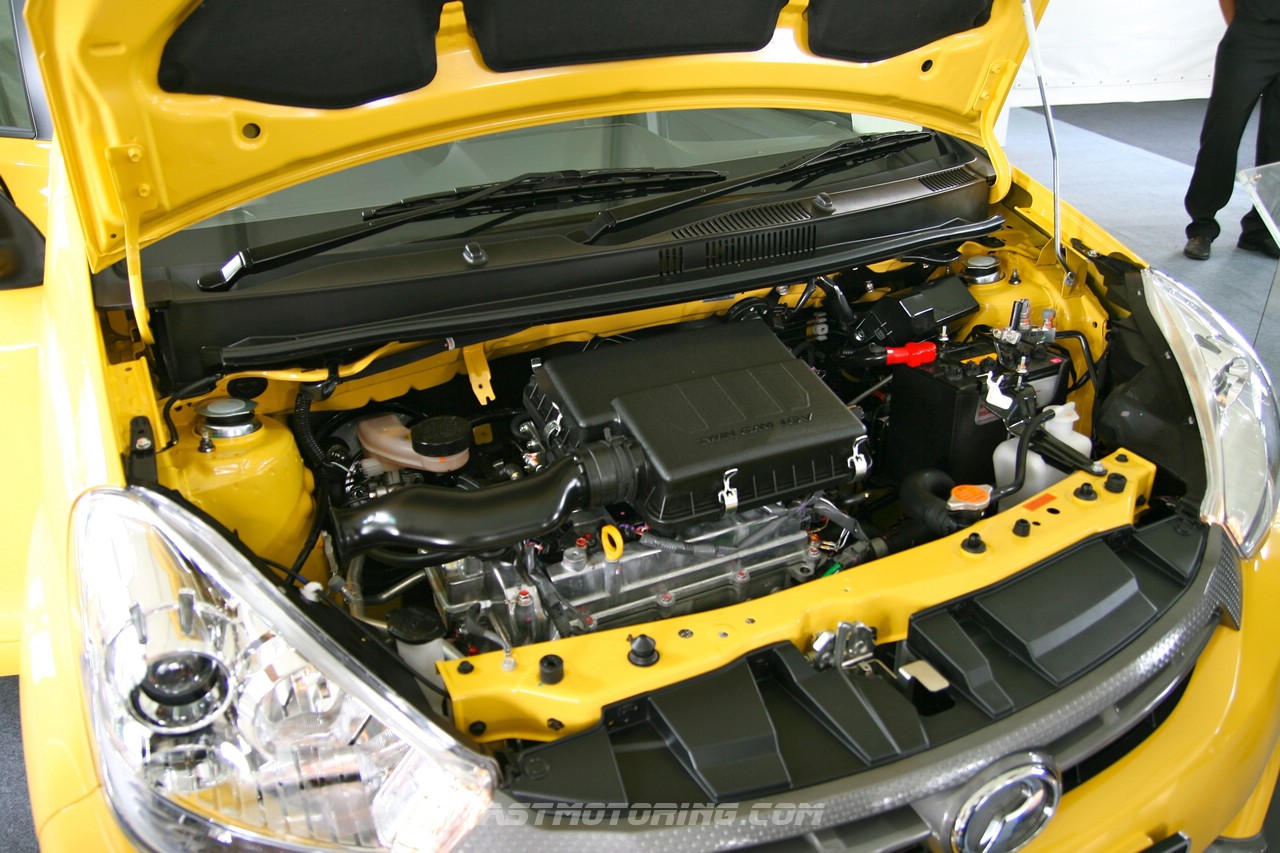
The performance of the new Myvi SE and Myvi Extreme have uprated and now fitted with 1.5-litre DOHC 16V DVVT (3SZ-VE) engine. The power plant delivers a maximum power of 76kW (102hp) @ 6,000rpm with a max torque of 136Nm @ 4,400rpm. Likewise, the previous generation of Myvi SE is fitted with the standard 1.3-litre engine.

The new Myvi 1.5 SE and Extreme in manual transmission can accelerate from 0-100km/h in 9.98 seconds, while the auto transmission takes 12.49 seconds. The Myvi 1.5 SE/Extreme manual is considered the fastest Perodua’s vehicle in production.

Based on Perodua Testing Data, the fuel consumption of the New Myvi 1.5-litre manual is tested to deliver 15.9km/litre. While the New Myvi 1.5-litre automatic is tested to deliver 12.9km/litre.

The entire suspension system for both variants have been slightly re-tuned to accommodate the bigger engine for better handling and ride comfort.

8643  630xfloat= perodua myvi 1 5 extreme 15 Perodua Myvi 1.5 Extreme and 1.5 SE Officially Launched in Malaysia
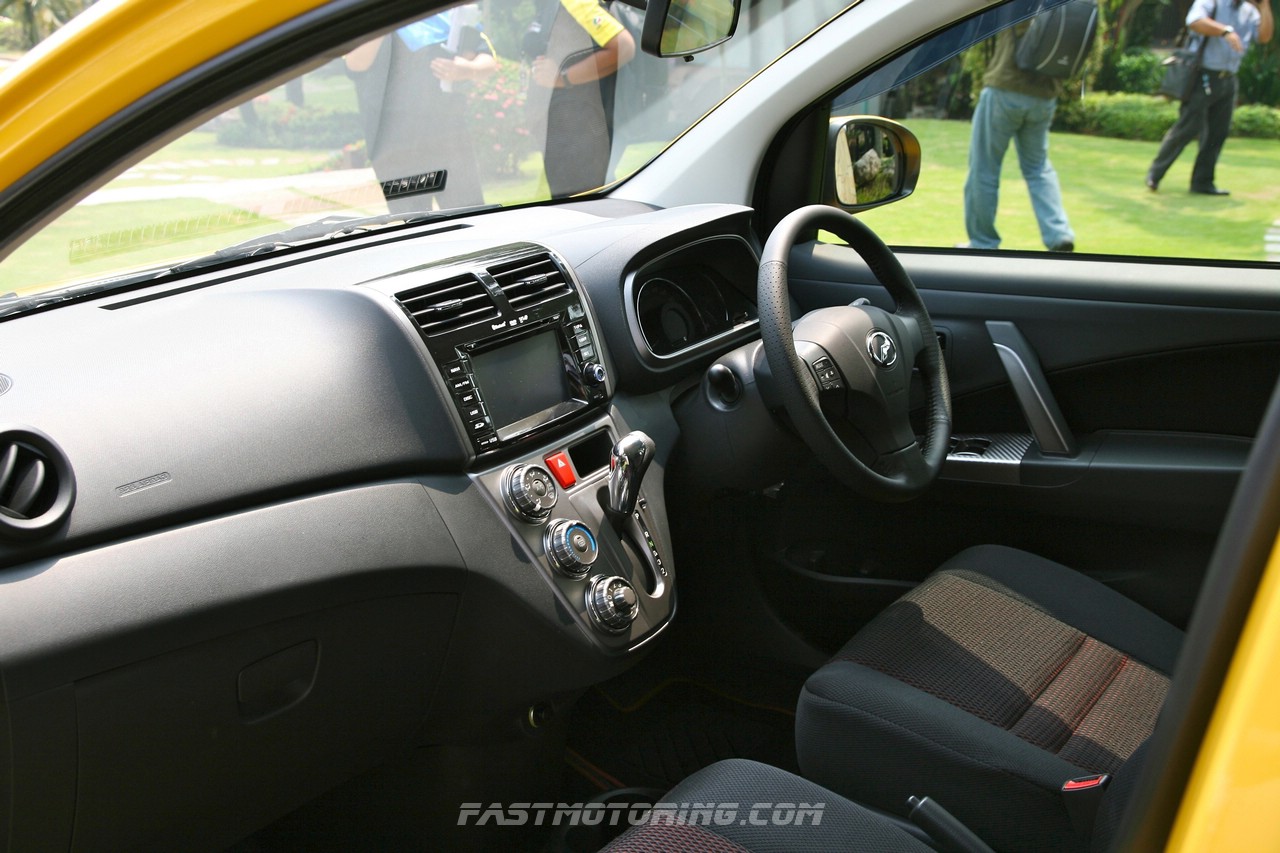
Weigh against the new Myvi 1.5 SE and Extreme, the Myvi 1.5 Extreme comes standard with a more aggressively styled body-kit, multimedia system with navigation (built-in GPS, DVD player, Bluetooth with hands-free function, USB port), semi-bucket seats with leather covers, and tinted windows. In the other hand, the Myvi 1.5 SE only comes with fabric semi-bucket seats, standard SE body-kit, and multimedia system with navigation (for Myvi 1.5 SE Auto only).

8669  630xfloat= perodua myvi 1 5 se 18 Perodua Myvi 1.5 Extreme and 1.5 SE Officially Launched in Malaysia
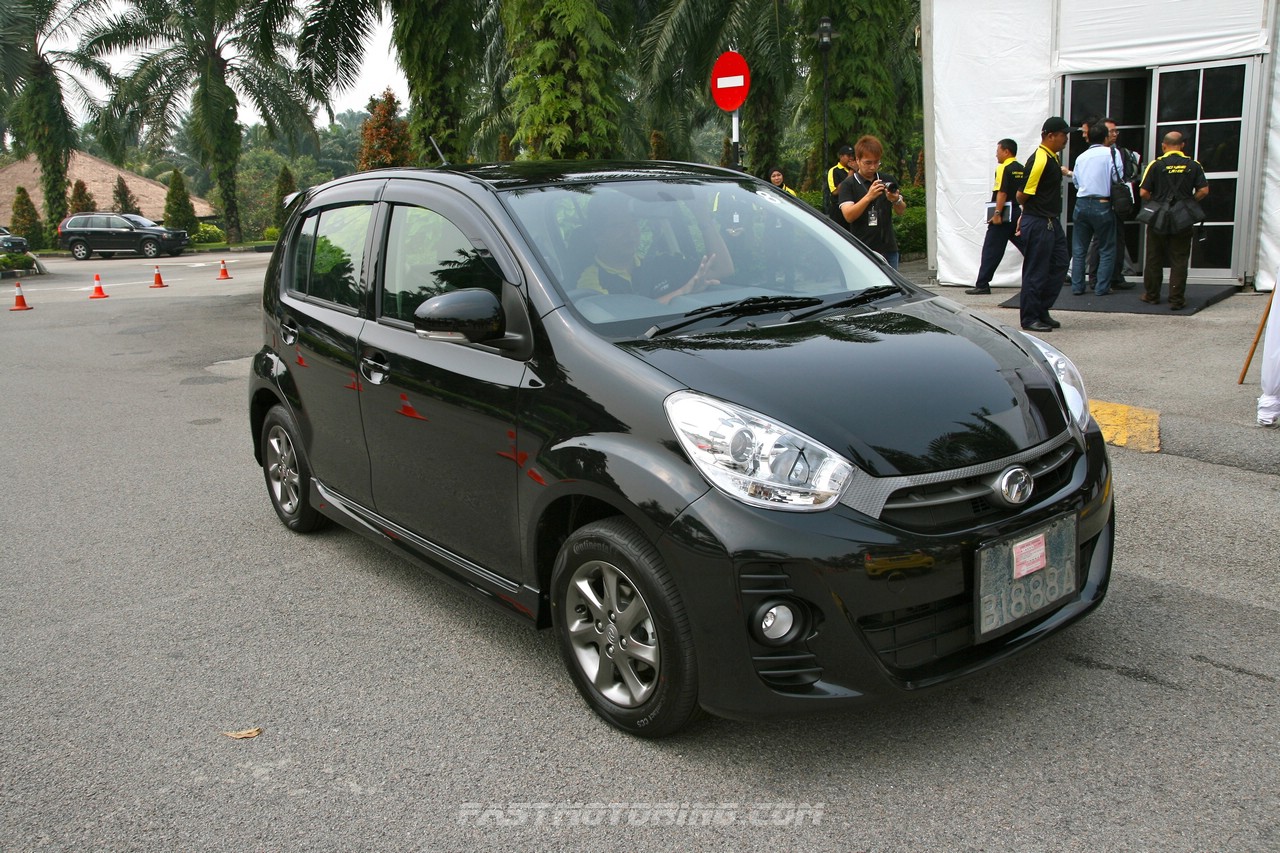
On the colour variations, the New Myvi 1.5 SE comes in 5 colours (Solid Majestic Yellow, Solid Ivory White, Metallic Mystical Purple, Metallic Ebony Black, and Metallic Glittering Silver). At the same time, the New Myvi 1.5 Extreme only comes in 3 colours (Solid Majestic Yellow, Solid Ivory White, and Metallic Ebony Black).

8658  630xfloat= perodua myvi 1 5 se 07 Perodua Myvi 1.5 Extreme and 1.5 SE Officially Launched in Malaysia
In the safety aspect, both variants are equipped with dual SRS airbags, ABS with EBD and BA system as standard. Moreover, Perodua claims that the new variants also come with a collision-resistant body to better withstand impact as well as have pedestrian protection to reduce the likelihood of serious injury to pedestrians.

All Perodua including the New Myvi 1.5 SE and Myvi 1.5 Extreme come standard with 3-year/100,000km warranty (and optional 2-year/50,000km extended warranty).

Recently, Perodua was awarded with 4-star Malaysian Vehicle Assessment Programme (MyVAP) rating by the Malaysian Insitute of Road Safety (MIROS) for the New Myvi including the 1.3 (Standard, Premium and Elegence) and 1.5 (SE and Extreme).


Malaysia Proton's hybrid car may roll out in 2-3 years


PUTRAJAYA: Proton Holdings Bhd’s global compact electric and hybrid car, Emas, could enter the market in two to three years, its chairman, Datuk Seri Mohd Nadzmi Mohd Salleh, said.

The electric vehicle, designed by Italdesign Giugiaro and developed by Proton, was first unveiled at the Geneva International Motor Show last year.

Emas, short for Eco Mobility Advance Solution, is a plug-in electric vehicle (EV) or hybrid Range Extender Electric Vehicle (REEV).


The compact car’s powertrain could include a turbocharged small engine of 1.2-litre capacity, or lower.


Proton is currently fleet-testing the Exora REEV and Saga EV to assess their potential.

The national car maker yesterday handed over five Exora REEVs and three Saga EVs to the government to be test driven. This would be the first step before mass-producing them.

The vehicles were received by Prime Minister Datuk Seri Najib Razak in a ceremony witnessed by former prime minister Tun Dr Mahathir Mohamad, who is also Proton’s adviser.

Others who took delivery of the vehicles at the PM’s Department were Energy, Green Technology and Water Minister Datuk Seri Peter Chin Fah Kui, Second Finance Minister Datuk Seri Ahmad Husni Mohamad Hanadzlah, Deputy International Trade and Industry Minister Datuk Mukhriz Mahathir and Deputy Transport Minister Datuk Abdul Rahim Bakri.

This is the first phase of fleet testing, a collaboration between Proton, the Energy, Green Technology and Water Ministry and International Trade and Industry Ministry.

Nadzmi said 250 electric-powered cars would be handed to the government in phases for fleet-testing by the year-end or early next year.

2011 New MyVi 1.5-litre to be well-received - Perodua


KUALA LUMPUR: Perusahaan Otomobil Kedua Sdn Bhd (Perodua)expects its new variants, New Myvi Special Edition (SE) and New Myvi Extreme, to be well-received by Malaysians. Its managing director, Datuk Aminar Rashid Salleh, said the new Myvi, which were powered by 1.5-litre engines, had undergone a facelift based on feedback by buyers who wanted to have bigger capacity engines.

"We took 27 months to develop the new generation of Myvi compared with 34 months for the first generation and a lot of improvements have been made," he said at the launch of the car here today.
The new variants would be priced between RM50,900 and RM61,700, he said.
Aminar said following the launch, Perodua expected sales of the new variants to contribute 45%-55% to the overall monthly sales of 9,000-9,500 New Myvi 1.5 model and helped meet the 2011 sales target of 190,000 units.
"Until the today, Perodua has received 2,000 bookings, of which 80% were for Myvi SE. The previous Myvi SE contributed some 30% of the total Myvi sales," he said, adding that the New Myvi 1.3-litre variants received 35,000 bookings with 19,000 units delivered to date.

Earlier, the Malaysian Institute of Road Safety awarded Perodua a four-star Malaysian Vehicle Assessment Programme rating for the New Myvi.

The New Myvi SE 1.5-litre and New Myvi Extreme 1.5-litre come in manual and automatic transmissions. The SE comes in five colours solid majestic yellow, solid ivory white, metallic mystical purple, metallic ebony black and metallic glittering silver. The Extreme comes in three colours solid majestic yellow, solid ivory white and metallic ebony black. - BERNAMA

FOREX 4U