Pages

Sunday, March 25, 2012

Masterskill CEO raises shareholding to 23.81%

PETALING JAYA: Masterskill Education Group Bhd group chief executive officer Datuk Seri Edmund Santhara bought more shares in his beleaguered company on Thursday, forking out some RM7.7mil to mop up 7 million shares at a price of RM1.10, according to Bursa Malaysiafilings.

This acquisition raised his shareholding in the company to 23.81% or 97.6 million shares.
The rationale for his acquisition isn't yet clear and he has yet to return calls to StarBizWeek. When contacted, Masterskill's other substantial shareholder Siva Kumar M. Jeyapalan said that he was just a passive shareholder, and was not aware of any upcoming plans for the company.
Siva had on Oct 5 last year emerged as a subtantial shareholder of the education group after acquiring 41.2 million shares or a 10.05% stake in the company at approximately RM1.10 a share.
Stakes raised: Santhara spent RM7.7mil to purchase 7 million Masterskill shares to raise his total to 97.6 million shares.
It had been rumoured earlier that Masterkill could be a takeover target by Khazanah Nasional Bhd or Ekuiti Nasional Bhd. Industry observers said that pricing was likely an issue preventing the buyout deals from materialising so far.
But one investment banker said he would not rule out a potential deal involving Masterskill, perhaps one that did not take the strict privatisation model.
He noted that Masterskill still had an on-going business as well as fixed assets in the form of its campuses.
Presently, its main campus is in Cheras, and it has five other smaller campuses in Johor Baru, Ipoh, Kota Baru, Kota Kinabalu and Kuching. Masterskill is also in the process of building its flagship campus in Bangi, Selangor, where it has received RM250mil in financing for the first phase of this project.
Santhara's recent acquisition of shares has certainly got the market talking and people are now watching the stock closely.
Aside from Santhara and Siva, another major shareholder of the company is private equity firm Crescent Point Investment Holdings Ltdwith 21.5%.
Less than two years ago, Masterskill was listed at RM3.80 and even touched a high of RM4.25 on August 2010.
It recorded a net loss of RM1.57mil for its fourth quarter to Dec 31, 2011 from a previous net profit of RM26.85mil on the back of a 38.81% drop in revenue to RM49.5mil.
For the full year (FY11), net profit was down almost three fold to RM38.14mil from RM102.14mil in FY10 on the back of a 20.77% drop in revenue to RM250.17mil. The fourth-quarter results were dragged down by weak student intake and higher-than-expected staff costs. For the full year, operating margins almost halved to 26%, partly due to a surge in depreciation.
The 21% decline in full-year revenue resulted mainly from a 35% drop in student intake to 3,500, of which only 250 students enrolled in the second half of the year. The total active students in 2011 stood at 14,000.
Source: Star Online.



Friday, March 23, 2012

Get Rich with Apple's Share


NEW YORK (Reuters) - When Anton Marinovich turned 18, his grandmother gave him $1,000 with strict instructions to invest in the stock market. He chose Apple Inc.
Seventeen years later, his investment is worth more than $240,000 and will bring him over $1,000 a quarter through the company's new dividend plan.
"It's pretty bananas," Marinovich said. "I always hear about all these people here in Silicon Valley falling into huge luck, but I never thought it would happen to me," said Marinovich, who is the director of sales at Equilar, a Redwood City, California-based executive compensation consultant.
Watching Apple shares soar more than 77 percent over the past 12 months has been a wild ride for people like Marinovich, who are firmly planted in the cult of Apple. Between him and his fiancee they own two iPhones, two MacBooks, an iPad and 400 shares of Apple.
Many loyalists bought stock years ago when shares languished at double-digit prices. The held on to it out of a love for the company and its products. Now, they are being richly rewarded by a share price of around $600 and a rich dividend payout from Apple's cash pile of nearly $100 billion.
Nearly two dozen individual Apple shareholders interviewed by Reuters say they are not going on crazy spending sprees or vacations to Fiji, despite the huge windfall they could get by cashing out. Practically none of them said they plan to sell, a loyalty that gives some of their financial planners heartburn.
That's not to say they aren't treating themselves - or breathing a little easier.
Marinovich said the comfort of his Apple investment cushion means more freedom in his spending habits. He recently bought himself a $2,000 Omega watch and is shopping for a new Audi to replace his Volkswagen Jetta.
Retiree Pat Harshbarger, 79, has seen her $13,800 investment in Apple rise to $46,000. That paper wealth has made the former nurse comfortable enough to consider taking a few more trips to Maine to visit family and one to Las Vegas, where she and her husband want to try their hand at the slot machines, she said.
Seventy-one years old Stan Merkin, a retired Dell and IBM programmer whose portfolio has gained about $100,000 just by buying Apple since late last year, said he will buy another 50 shares if the stock hits $650.

 
"What I have made in Apple gives me comfort about how I can live in retirement," he said.
Many loyal Apple shareholders see the stock as a "safety net" for their futures, one they believe only goes up.
"I am a firm believer in the company," said Marinovich's 31-year-old brother Erik Marinovich, who also bought 50 shares of Apple with money from his grandmother. The investment is now worth $60,000 more than he paid. "I am going to stay in this until retirement."
EMOTIONAL ATTACHMENT
For Apple lovers in their 30s and 40s - those who bore the brunt of both the dot-com crash and financial meltdown - holding Apple feels a responsible move.
Nate Landau, 38, lived at the edge of the dot-com boom and bust. He has worked at eight different companies, mostly in the technology sector, since 1996. He still remembers the night his father brought home Apple's first computer, when he was 10 years old.
"I just remember using Mac Paint and really being blown away," said Landau, who once insisted a new employer provide him with a Mac even though the rest of the company had PCs.
"I see Apple as my rainy day fund," said Landau, who is now managing director of Internet publisher Food Republic. His investment of $15,000 in Apple stock 12 years ago is now worth $60,000 even though he sold 200 of his 300 shares.
Kristi Faulkner recalls a similar experience when she saw her first Mac Classic in a high school art classroom in Grand Prairie, Texas.
"It had this little, tiny four by six screen and it was the coolest art tool I had ever seen," said Faulkner, who with her two daughters currently own two Mac desktops, three MacBooks, two iPhones and countless iPods, iTouches and nanos.
Faulkner, now 44, is president of Womenkind, a marketing agency that targets women. She still feels a strong connection to Apple - one that extends to her stock.
"Apple made computers accessible to me as a girl and as an artist," she said. "If it dives tomorrow, I am not selling."
That kind of emotional attachment makes financial advisers more than a little nervous.
When Faulkner signed up with a financial adviser a year ago, all of her savings was invested in Apple and Internet search giant Google.
"She told me to sell it and I said, 'are you kidding'," Faulkner said. She did trim back from 250 to 155 shares in Apple, but still made more than $82,500 off Apple since 2005.
Financial advisers regularly warn Apple groupies to get out of owning so much Apple - before they regret it.
"My broker is constantly calling me to tell me to sell it," said Jeff Gonzalez, a 31-year-old advertising director whose portfolio has gained more than $16,500 from the 31 shares of Apple he bought in 2005. "Every week I call him up and say 'Look you are wrong, it's gone up again'."
"Nothing is going to make me sell," Gonzalez said.
Even Apple lovers who are in the financial business have a hard time staying objective.
Matt Reiner, a 25-year-old financial adviser whose investment in 40 shares of Apple has gained about $11,000, knows he should get out while the going is good.
"I know there is so much euphoria around Apple, but it's very hard to sell a stock which seemingly has its products in everyone's hands," he said.


Source: Yahoo News

Know your smartphone or pay more


PETALING JAYA: You've given up your old faithful mobile phone and finally caved in to the lure of the smartphone.
Then you enjoy flashing your latest mobile gadget in public and pretend to be familiar with all its functions and offerings, including the all-important mobile Internet service to browse and send and receive e-mails.
But be prepared for a shocker as you continue to bask in the marvels of your speedy Blackberry, iPhone, Samsung or HTC smartphone.
Those who do not know how to fully operate the smartphone may be in for a “massive” phone bill shock from their network operator, as many new smartphone users have found out.
They are in the group of smartphone users who have not signed up for a data package which enables the use of mobile Internet service.
If one does not know how to manage the connections of the smartphone, a large amount of data could be “accepted” by the smartphone without the knowledge of the user.

 
Telecommunication companies have begun sending out SMS alerts and even contacting new smartphone users directly to alert them on their bills.
A victim, who only wished to be known as Agnes, said she was shocked to get a huge bill, adding that she was forced to pay the amount despite insisting that she had not sought the data.
“I received a smartphone as a Christmas present and got excited and wanted to use it immediately. I inserted my existing SIM card into the smartphone right away.
“I was shocked to receive a bill for RM324 which was three times more than my normal monthly charge,'' she told The Star.
Another unsuspecting smartphone user, Raja, found out the bitter truth about data usage when he was slapped with a RM750 bill.
“I tried reasoning with my network operator but to no avail,'' he added.
Both Agnes and Raja had not signed up for data packages, which can vary from as low as RM2 (daily) to RM120 (monthly).
A telco official said that the firm's call centre received about 20 to 30 complaints daily for data usage charges, with most users appealing for waivers on the ground that they did not know how to operate the smartphones' mobile Internet settings.
Fomca president Datuk Paul Selvaraj urged industry regulator, the Malaysian Communications and Multimedia Commission (MCMC) to step in to prevent thousands of smartphone users from being charged excessively for data usage.
He said it should be made compulsory for smartphone distributors to provide their customers with an information sheet upon purchase.
“It will not be possible to regulate verbal information, so it must be handed to the customer in the form of a fact sheet.
“This will allow users to make an informed decision on whether to register for a data plan,” he said.
Source: Star Online

Sunday, March 18, 2012

10 Ways to Save Gas (and Money)


The cost of gas continues to rise and from the looks of things, it's not slowing down anytime soon. To help get the most bang for your transportation buck, we've collected 10 tips to help you save gas and money. 


1. Brake correctly
Cars use the most gas when they accelerate. While this may seem obvious, in somewhat heavy traffic this can mean burning through a lot of gas. It's fairly easy to maintain a speed in a long line of cars without using your brakes-instead, pay attention to the cars in front you and anticipate when to slightly ease of the gas. This will keep you from losing momentum when you hit the brakes. In heavy traffic, this will result in 10-20% better gas mileage. 


2. Use cruise control
If your car is equipped with cruise control and there isn't much traffic, you'll save gas if you turn it on. It keeps your speed constant, which means you won't have to keep accelerating and use more gas. 


3. Shift to neutral when still
When idling at a stoplight or in a parking light, shift into neutral. This reduces transmission strain and gives the transmission some time to cool down. 


4. Drop extra weight
The heavier the car, the more gas it takes to move it. Remove heavy items that've been collecting dust in your trunk-it's a simple thing that will instantly save you money. Bonus tip: Don't fill up until you're on empty since gas is heavy too. 


5. Pick the best route
If your commute involves lots of stoplights, it might not be the most fuel-efficient route. Stopping a lot only increases the amount of gas you use. Look for low-traffic highways or back roads. 


6. Turn off the AC
As you probably know, running the air conditioner impacts your car's overall fuel efficiency. So if you can bear it, try not to turn it on. If you must, turn it off 5-10 minutes before reaching your destination. The car will stay cool enough for that short amount of time. Bonus tip: always park in the shade-that way, your car won't have to work as hard to get cool. 


7. Remove your ski rack
Unless you're using the ski, bicycle, or luggage rack on the roof every week, remove it. It increases the wind resistance on your car which results in more gas used. 


8. Carpool
The amount of gas used per person is halved each time you carpool to work with a co-worker. Not only are you saving gas and money, you get the added bonus of cruising in the carpool lane! 


9. Check your air filter
At any given time, almost 25% of cars need to replace their air filter. Doing so can improve gas mileage by 10%! 


10. Drive slower
It's true: you use less gas when you drive slower. In fact, for every five miles per hour you reduce highway speed, you reduce fuel consumption by 7%. 


Source: Yahoo News

Monday, March 12, 2012

NFC SCANDAL: Cow Girl's husband charged with graft


KUALA LUMPUR, March 12 — A Malaysian court charged a cabinet minister's husband with corruption on Monday, a day after the minister announced plans to resign in a scandal that has embarrassed the government.
PKR said today it will continue to pursue the recovery of RM250 million in federal funds awarded to the National Feedlot Corporation (NFCorp) even though Datuk Seri Shahrizat Jalil’s husband has finally been hauled to court to face criminal charges.
The party’s strategic director, Rafizi Ramli, who had made a slew of exposés on the cattle farming project awarded to Wanita Umno chief Shahrizat’s family, hoped the prime minister will soon address the “main issue” of the abuse of public funds.

“(Datuk Seri) Najib (Razak) has not responded... And we will continue to push to recover the RM250 million,” Rafizi told The Malaysian Insider when contacted today.
Rafizi, however, lauded today’s move to charge Shahrizat’s husband, Datuk Seri Mohamed Salleh Ismail, in the Sessions Court with criminal breach of trust and violating the Companies Act in relation to RM49 million in federal funds given to the NFCorp.
“It is a welcome decision. It shows that Najib and [Barisan Nasional] prove they mean business,” he said.
“(But) I hope it’s not a show of charging them before the election and acquitting them after,” he added.
Shahrizat (left) announced yesterday her decision to relinquish next month her Cabinet post as the women, family and community development minister. She, however, will continue as Wanita Umno chief despite being dogged for over four-and-a-half months by the NFC scandal.

The former Lembah Pantai MP and her family were accused by the opposition of using a RM250 million federal loan meant for the national cattle-rearing scheme to pay for unrelated land, property and expenses.
The cattle-rearing company is headed by her husband, Mohamad Salleh, and their three children.
It was tapped to run the National Feedlot Centre in Gemas, Negri Sembilan in 2006, when Shahrizat was in Cabinet.
She previously resisted calls from within her own party, including by influential former prime minister Tun Dr Mahathir Mohamad, to quit by stressing that she was “only the wife” of Mohamad Salleh and had nothing to do with the embattled entity.
NFCorp hit the national headlines after it made it into the Auditor-General’s Report last year for missing production targets.
Police recommended last month that the Attorney-General (A-G) charge NFCorp’s directors for criminal breach of trust, but the A-G had asked the police to conduct further investigations prior to charging Mohamad Salleh today.
Shahrizat was appointed as the women, family and community development minister in 2001 and held the post until 2008, when she lost her seat to Nurul Izzah Anwar in the general election.
She was then appointed special advisor to the prime minister on women affairs and social development, before taking up her Cabinet portfolio once more a year later.
Source: Malaysian Insider

Saturday, March 10, 2012

10 reasons why credit card rates must not be raised


These same reasons mean the rates should be lowered instead
There is no doubt some concern that the level of household debt in Malaysia is rising. This covers not just credit cards but also housing, car and personal loan as well.
Bank Negara has taken measures to stop the rise in household debt, which stood at RM580bil as at end-2010 or 76% of gross domestic product (GDP total economic output). Credit card debt, however, forms only about 5% of this or some RM30bil.
Credit extended by the banks to credit cards is, however, much higher at RM124bil which means that most of us are not taking the bait and borrowing on credit cards because interest rates on credit cards are so prohibitively high.
Credit card operations are phenomenally profitable for banks with a gross lending margin after full provision for possible bad loans of 12.5 percentage points, more than six times the margin for new property loans of around two percentage points.
Now, they have been raised by up to 1.5 percentage points for some categories or up to 18% a year, a totally unwarranted increase that needlessly burdens those desperate enough to live on credit card debt. Well, one must suppose that it's still better than depending on Ah Longs and their 100% a year I jest of course.
Below are 10 reasons why credit card interest rates should not be raised. In fact, the reasons indicate a clear need to bring down drastically credit card interest rates.
1. Interest rates are already too high 17.5%. Effective March 1, banks have increased credit card interest rates by up to 1.5 percentage points with the new range between 15% and 18% a year depending on your payment record. Bank Negara said it did not direct the banks to raise the rates but they are within acceptable limits.
2. Average commercial bank lending rate is low 5%. That 15% to 18% is more than three times, yes three times or 300% more than the average lending rate of commercial banks of just over 5%. What justifies such a premium? Nothing as the rest of the reasons will show.
3. Deposit rates are low, average 2% perhaps. The average cost of funds of banks is not easily available because of the mix of their deposits. But fixed deposits are below 3%, savings deposits around 1% and current accounts are mostly zero interest rate or negligible. That would mean the average cost of funds for banks is probably as low as 2%. If average credit card debt is 16.5% a year (average of 15 and 18), that gives banks a massive 14.5% margin a year on credit card debt! Yes, I hear the banks say that credit card debt is high-risk but is it? Which brings us to our next point.
4. The non-performing loan rate for credit cards is low, a mere 1.7%. In a briefing last year, Bank Negara deputy governor Nor Shamsiah Mohd Yunus said: “Although credit card usage continues to increase, the non-performing loan ratio remains low. As at end 2010, credit card non-performing loans were only 1.7% of total credit card loans and 2% of the total banking system's non-performing loans.” After accounting for non-performing loans, those which have not been serviced in time but have not been classified as bad, the margin is still 12.8% compared with perhaps 2% for new property loans.
5. Late penalties are already prohibitive - up to 3650%. The minimum charge on late payments is RM10 or 1% of the outstanding amount whichever is larger, doubled from 0.5% previously even if you have not exceeded your credit limit. Let's say you have an outstanding balance of RM100 and you did not service that balance and you were a day late. You incurred 10% a day (RM10 as a percentage of 100) or 3,650% a year on the balance! If you had RM10,000 as balance, your interest rate if you are a day late would still be a hefty 365% a year even though you have not exceeded your credit limit. These charges are over and above the already high interest rates and significantly add to the gross margin of banks because people being people pay late.
6. Most banks charge yearly fees. These range from RM60 to RM600 and further increase the margins of banks. There are some eight million cards in circulation, including some 900,000 supplementary cards. If the average amount charged per card is RM100, that means RM800mil to card issuers.
7. Banks get payment from traders. Adding to bank gross margins is the fact that traders who accept credit cards pay up to 2% in commission. This is on the amounts transacted which are many times more than credit card debt and add significantly to bank profits from credit card operations.
8. It will not solve household debt problem. Increasing credit card interest rates does not solve the household debt problem because credit card debts are just 5% of this. But it allows banks to increase rates when neither the cost of funds nor non-performing loan figures justify this on the pretext that it does.
9. It will needlessly burden those in trouble. Most people who utilise credit card debt know that it costs a lot. They use it in many cases because they don't have a choice. When banks already have such a large margin for credit card debt, further increasing interest rates will only burden those in trouble and do nothing for them. Banks have already built in a huge margin for credit risk here and they should not increase rates further even if bad loans increased which they have not.
10. It will only increase profits of banks and card issuers. Credit card debt is not increasing at a rapid rate. Over the past year, it has increased just 7%, less than overall loan growth of 12.5% last year. Increasing credit card interest rates merely increases the profits of banks and card issuers and does nothing significant in terms of restructuring lending profiles for the better.
Credit card operations are phenomenally profitable for banks with a gross lending margin after full provision for possible bad loans of 12.5 percentage points, more than six times the margin for new property loans of around two percentage points.
The longer-term aim should be to bring the margin down, not up. Based on that 12.5% margin, the gross take for the banks on RM30bil in loans is a massive RM3.75bil, before taking into account other sources of income such as late penalty charges, trader commissions, yearly fees, merchandising and commission on foreign exchange. You would need RM190bil in new property loans to rake in that amount.
It is impossible to understand why the authorities allow banks to make such high profits on credit card operations.

Adapted: Star online

Friday, March 9, 2012

New Ipad VS Kindle Fire/ Samsung Galaxy


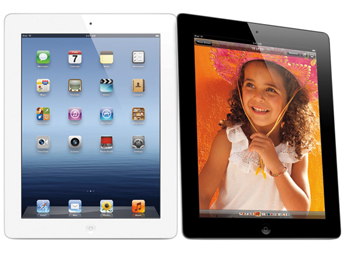
Apple launched a new iPad yesterday, but it also did something it hasn’t done since it introduced its first tablet two years ago: It dropped prices on an older version.
The new Apple iPad
The new Apple iPad
The new iPad will still start at $500 for the 16GB Wi-Fi versions, as did prior iPads when they were launched. But the 16GB Wi-FiApple iPad 2 will drop by $100, to $400.
So what do you get for $100 more on the new iPad? Here's a comparison of features and specs for the new iPad and the iPad 2. We'll also take a look at the same features and specs for theSamsung Galaxy Tab 10.1 (16GB, $500) and the Amazon Kindle Fire(available only with 8GB, $200).

Apple iPad 2
Apple iPad 2
Display. Resolution on the iPad 2's excellent display is 1,024 x 768. But Apple's pumped that up to 2,048 x 1,536 for the new iPad, resulting in what's called a Retina display: That means individual pixels are indistinguishable to the human eye at a certain distance from the device—15 inches, in the case of the new iPad, Apple says. Resolution on the Galaxy Tab is not as good at 1,280 x 800, but still better than many other tablets. On the Kindle Fire, resolution is 1,024 x 600, which resulted in a very good display score in our tests.
Processor. The new iPad needs more processing power to drive the demanding display without negatively effecting battery life, so Apple is using a dual-core Apple A5X with quad-core graphics, which is more powerful than the iPad 2's dual-core processor. That should also result in more exciting visuals for games and other apps. Both the Galaxy Tab and the Kindle Fire have dual-core processors as well.
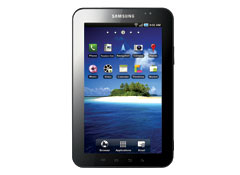
Samsung Galaxy Tab
Samsung Galaxy Tab
Camera. The 5-megapixel camera on the new iPad represents light years of improvement over the iPad 2's camera, at 0.7 megapixels. The new camera is more akin to the one found on the iPhone 4. The Galaxy Tab has a 3-megapixel camera, and the Kindle Fire has no camera at all.
Weight and dimensions. At 1.44 pounds, the Wi-Fi version of the new iPad weighs a tad more than the iPad 2, which is 1.33 pounds. (Add high-speed 4G capability to the new iPad, and its weight rises to 1.46 pounds.) The Galaxy Tab weighs in at 1.30 pounds, and the Kindle Fire at 1.33. Displays measure 9.7 inches for both iPads, 10.1 inches for the Galaxy Tab, and 7 inches for the Kindle. As for thinness, the new iPad got a bit thicker, growing from 0.34 inches to 0.37. The Galaxy Tab thickness is about 0.30 inches, and the Kindle is 0.5 inches.
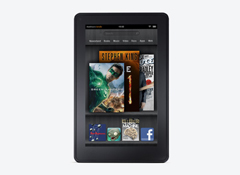
Amazon Kindle Fire
Amazon Kindle Fire
Bottom line: The iPad 2 is now $100 less than the similarly configured Samsung Galaxy Tab (both are CR-recommended products). But if you're the type who wants to stay ahead of the curve with your technology, the crystal-clear Retina display on the new iPad and its better graphics processor might prove too tempting to resist. And for those on a budget who want a smaller device, the Amazon Kindle Fire (a Consumer Reports Best Buy) remains a viable choice.
Make sure to come back to our blog for our first impressions and review of the new iPad, which goes on sale March 16.

Copyright © 2006-2012 Consumers Union of U.S., Inc. No reproduction, in whole or in part, without written permission.

FOREX 4U